
Maintaining your vehicle isn’t just about keeping it running — it’s about ensuring safety, reliability, and long‑term performance. A well‑structured auto maintenance and repair guide empowers car owners to handle routine tasks confidently, saving money and avoiding unnecessary trips to the mechanic.
This comprehensive blog provides step‑by‑step instructions, supported by clear diagrams, for the most common vehicle maintenance jobs. Whether you’re a beginner or a seasoned DIY enthusiast, this guide will help you understand your car better and keep it in peak condition.
🔧 Why Auto Maintenance Matters
- Safety first: Properly maintained brakes, tires, and lights reduce accident risks.
- Cost savings: Preventive care avoids expensive breakdowns.
- Longevity: Regular servicing extends engine and component life.
- Confidence: Knowing how to fix small issues builds self‑reliance in auto maintenance.
🛠️ Essential Tools for DIY Car Repair
- Socket set: For bolts and nuts.
- Torque wrench: Ensures correct tightening.
- Jack and jack stands: Safe lifting of the vehicle.
- Multimeter: Electrical diagnostics.
- Workshop manual: OEM specifications and diagrams.
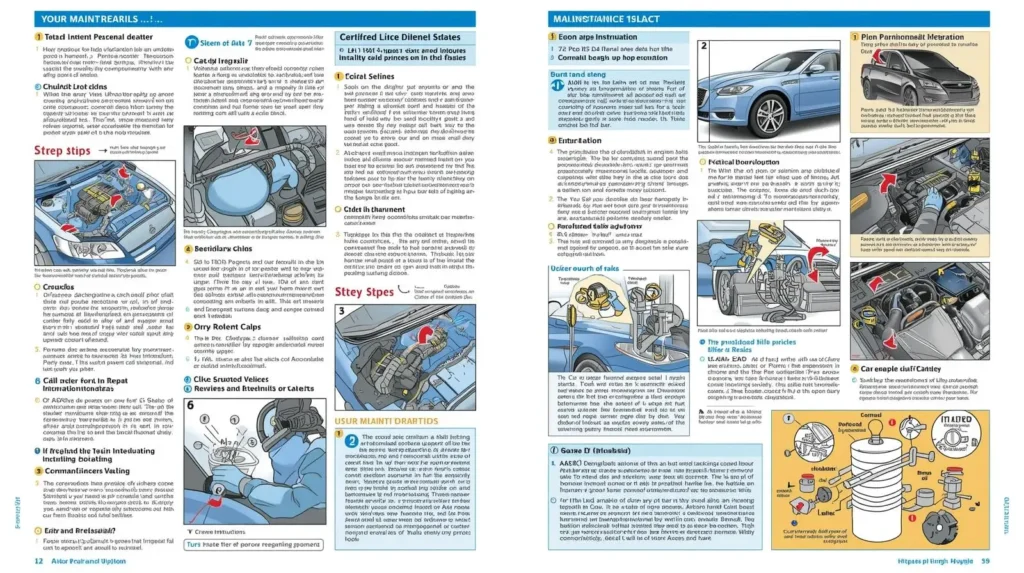
🚙 Step‑by‑Step Auto Maintenance Tasks
1. Oil Change
- Warm up the engine.
- Drain old oil.
- Replace oil filter.
- Add new oil (check manual for grade).
- Verify level with dipstick.
2. Brake Pad Replacement
- Remove wheel.
- Unbolt caliper.
- Slide out worn pads.
- Insert new pads.
- Reassemble and test braking.
3. Battery Check and Replacement
- Inspect terminals for corrosion.
- Test voltage with multimeter.
- Disconnect negative cable first.
- Replace battery if below threshold.
- Reconnect cables securely.
4. Tire Rotation
- Jack up car safely.
- Swap front and rear tires.
- Follow rotation pattern (cross or straight).
- Torque lug nuts properly.
5. Air Filter Replacement
- Open air box.
- Remove dirty filter.
- Insert new filter.
- Close housing securely.
📊 Maintenance Schedule Table
| Task | Frequency | Benefit |
|---|---|---|
| Oil change | Every 5,000–7,000 km | Smooth engine performance |
| Brake inspection | Every 10,000 km | Safety assurance |
| Battery check | Twice a year | Reliable starts |
| Tire rotation | Every 8,000 km | Even tire wear |
| Air filter replacement | Every 15,000 km | Better fuel efficiency |
📐 Importance of Diagrams in Auto Maintenance & Repair
- Visual clarity: Diagrams simplify complex systems.
- Error reduction: Prevents missteps in assembly.
- Learning aid: Helps beginners grasp concepts faster.
- OEM accuracy: Factory diagrams ensure precision.
💡 Troubleshooting Common Issues
- Engine won’t start → Check battery, starter, fuel supply.
- Brake squealing → Worn pads or glazed rotors.
- Overheating → Coolant leak or faulty thermostat.
- Dim headlights → Weak battery or corroded wiring.
- Uneven tire wear → Misalignment or improper rotation.
🌍 Digital vs Printed Repair Manuals
- Digital manuals: Searchable, portable, updated.
- Printed manuals: Reliable in workshops, no device needed.
- Hybrid approach: Use both for maximum convenience.
🧰 Advanced Repairs for Enthusiasts
- Timing belt replacement: Requires precision and torque settings.
- Clutch replacement: Demands transmission removal.
- Electrical diagnostics: Multimeter and wiring diagrams essential.
- Suspension overhaul: Shocks, struts, and bushings replacement.